

Preventive Dentistry: Pit and Fissure Sealants — Protecting Teeth Before Cavities Begin
September 18, 2023
What if you could protect teeth from cavities before they even begin?
Millions of microorganisms live in our mouths. Some contribute to dental plaque, a biofilm that can produce acids when exposed to sugars from food and drinks. Over time, repeated acid attacks can weaken tooth enamel and lead to dental caries, commonly known as tooth decay.
But did you know that certain areas of our teeth are more vulnerable to cavities than others?
The deep grooves (known as pit & fissures) on the chewing surfaces of our back teeth can be particularly difficult to clean. Even with regular brushing, plaque may accumulate in these narrow pits and fissures.
This is where Pit and Fissure Sealants can make a difference.
At Embrace Orthodontics, we believe that effective Preventive Dentistry is about identifying risks early and taking appropriate steps to protect oral health.
Pit and fissure sealants are one such intervention, particularly for children and adolescents whose newly erupted permanent molars may be susceptible to decay.
What Are Pit and Fissure Sealants?
The chewing surfaces of molars and premolars are not completely smooth. They contain tiny pits, grooves and fissures that help us grind food efficiently.
However, some of these grooves are narrow or deep enough to make plaque removal difficult, even with regular brushing. When plaque remains in these areas, the risk of developing tooth decay may increase.
A pit and fissure sealant is a thin protective material applied to the chewing surface of a suitable tooth. It flows into the pits and fissures and forms a barrier over these vulnerable areas.
By sealing the grooves, it helps prevent plaque-associated acids from causing decay in the protected areas.
Think of it as creating a protective shield over the parts of a tooth that are most difficult to clean.
Why Are the Pit & Fissures So Vulnerable?
Several factors can increase the risk of decay in these areas:
- Deep pits and fissures: Narrow grooves can make effective plaque removal difficult.
- Newly erupted permanent molars: These teeth can be difficult to reach with a toothbrush and may benefit from early assessment.
- Developing brushing habits: Children are still learning to brush all tooth surfaces thoroughly.
- Frequent sugar exposure: Repeated consumption of sugary foods and drinks increases the frequency of acid attacks on enamel.
- Previous dental caries: A history of cavities can indicate an increased risk of further decay.
The important takeaway is that good brushing habits remain essential, but certain tooth surfaces may need additional protection.
How Do Pit and Fissure Sealants Work?
The procedure is generally straightforward, minimally invasive, and does not usually require drilling or removal of healthy tooth structure.
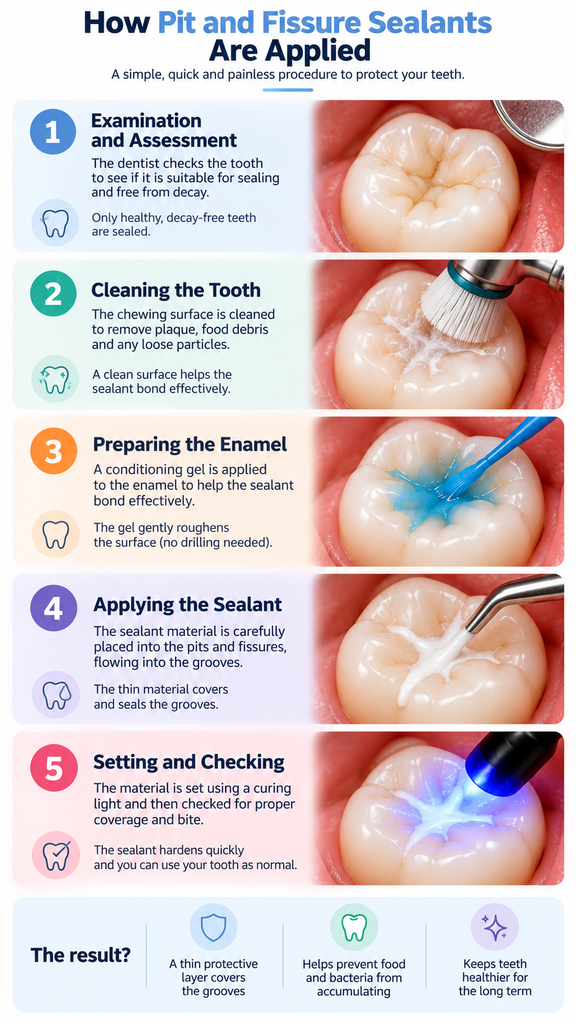
Step 1: Examination and assessment
The dentist examines the tooth, its grooves and its eruption status. The patient’s caries risk and the presence of any existing decay are also assessed to determine whether a sealant is appropriate.
Step 2: Cleaning the tooth
The chewing surface is cleaned to remove plaque and debris. Good surface preparation helps the sealant bond effectively.
Step 3: Preparing the enamel
A conditioning agent is applied according to the sealant system’s instructions. The tooth is then rinsed and dried as required.
Step 4: Applying the sealant
The sealant material is carefully placed into the pits and fissures, covering the grooves that need protection.
Step 5: Setting and checking
Depending on the material used, the sealant may be hardened with a curing light. The dentist then checks its coverage, retention and bite, making any necessary adjustments.
The objective is simple: protect vulnerable tooth surfaces while preserving healthy tooth structure.
Before and After: The Difference a Sealant Makes
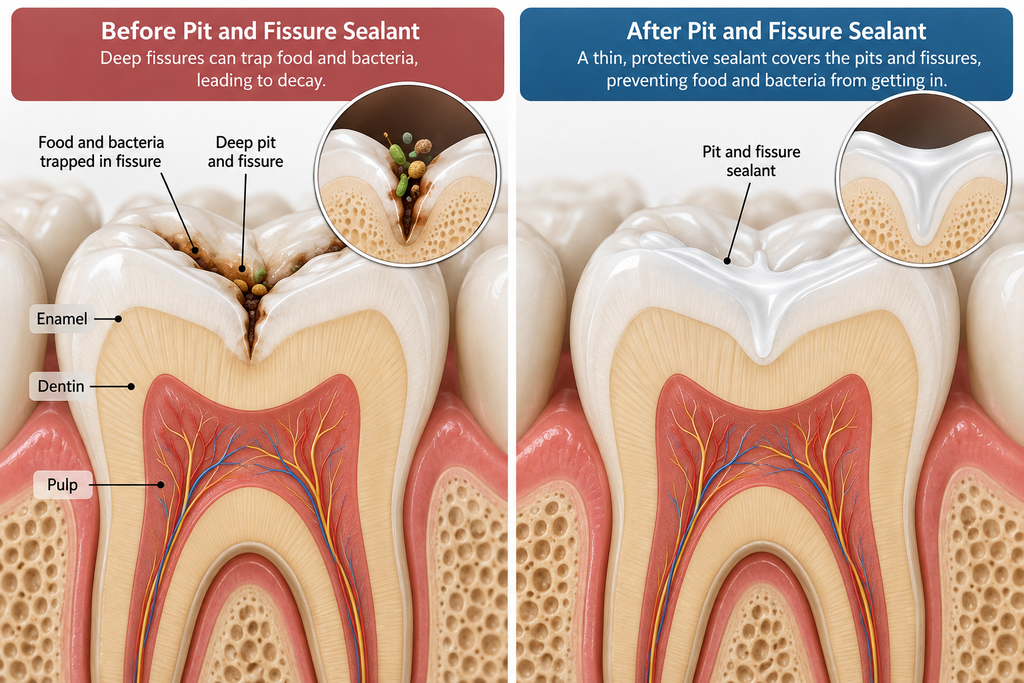
Before sealing: Deep fissures can provide sheltered areas where plaque accumulates. If conditions favour demineralisation, acids produced by plaque bacteria can contribute to the development of tooth decay.
After sealing: A thin protective layer covers the susceptible grooves, helping reduce the risk of decay in those areas.
A sealant does not sterilise the tooth or eliminate every cause of dental caries. It is a targeted preventive measure that works best alongside good oral hygiene, appropriate fluoride exposure and regular dental reviews.
Who Can Benefit from Pit and Fissure Sealants?
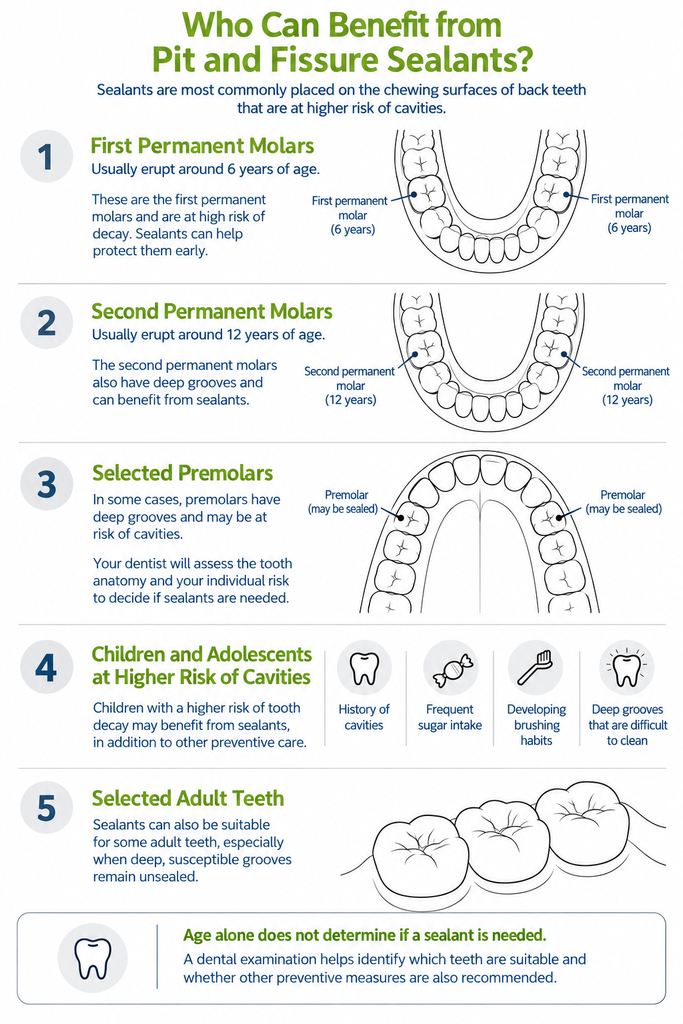
Children and adolescents are among the main beneficiaries, especially when their permanent molars have erupted and are suitable for sealing.
Sealants may be considered for:
- First permanent molars: These commonly erupt around 6 years of age.
- Second permanent molars: These commonly erupt around 12 years of age.
- Selected premolars: Where the tooth anatomy and caries risk justify additional protection.
- Children and adolescents at increased risk of tooth decay: Based on their dental history, clinical findings and individual risk factors.
- Selected adult teeth: Where susceptible grooves remain unsealed and the dentist considers treatment appropriate.
The timing of treatment depends on the individual tooth, its eruption status and the patient’s risk of decay.
Age alone should not determine whether a sealant is needed.
A dental examination helps establish which teeth are suitable and whether other preventive measures are also necessary.
Are Pit and Fissure Sealants Better Than Fillings?
Sealants and fillings serve different purposes.
A sealant is primarily a preventive treatment for a suitable tooth surface. It can also help limit the progression of certain early, non-cavitated lesions when clinically appropriate.
A filling is a restorative treatment used when a tooth has a cavity or structural defect requiring restoration.
When a sealant is appropriate, it can help protect the tooth without removing healthy tooth structure. However, if a cavity has already formed, the dentist must assess its extent and recommend the appropriate treatment. A sealant alone should not be assumed to be sufficient for established cavitated decay.
Prevention and restoration are complementary parts of dental care. The goal is to intervene appropriately and preserve as much healthy tooth structure as possible.
How Long Do Pit and Fissure Sealants Last?
Sealants can protect teeth for several years, but their longevity varies with the material, placement technique, retention and chewing forces.
Over time, a sealant may wear down, chip or partially detach. Regular dental examinations allow the dentist to check whether it remains intact and whether repair or replacement is needed.
A sealant is not a lifetime guarantee against cavities. Its effectiveness depends on proper placement and ongoing monitoring.
Are Pit and Fissure Sealants Safe?
Pit and fissure sealants are widely used in preventive dentistry and are supported by clinical practice guidelines for suitable teeth, particularly the molars of children and adolescents.
The procedure is generally non-invasive, and local anaesthesia is not usually required. The dentist selects an appropriate material and technique based on the tooth and clinical circumstances.
As with any dental intervention, the benefits, limitations and suitability should be discussed with the patient or parent before treatment.
Pit and Fissure Sealants at Embrace Orthodontics
At Embrace Orthodontics, we believe preventive dentistry begins by identifying risk before it becomes a bigger problem.
Pit and fissure sealants represent one cogwheel in a broader preventive care philosophy: protecting vulnerable tooth surfaces while supporting long-term oral health.
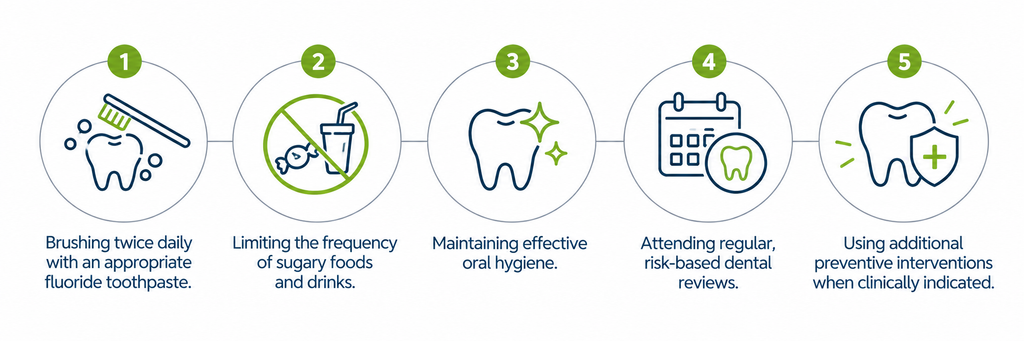
But prevention is never a one-size-fits-all approach. Depending on the patient’s needs, an effective preventive plan may also include fluoride interventions, professional biofilm management, dietary guidance, oral hygiene education and periodontal care.
Our approach is to assess each patient’s needs and recommend interventions based on clinical evidence, individual risk and long-term benefit.
Prevention Today. Healthier Smiles Tomorrow.
Protect Your Smile Before Cavities Begin
Prevention starts with understanding your individual risk of tooth decay. At Embrace Orthodontics, we assess your oral health and recommend preventive measures suited to your needs.
Book a preventive dental assessment at Embrace Orthodontics, Khar or Breach Candy, Mumbai, to explore the right approach for you or your child.
Your healthier smile starts with prevention.

